What Is a Good Suit Fit? 5 Checks Every Man Should Know
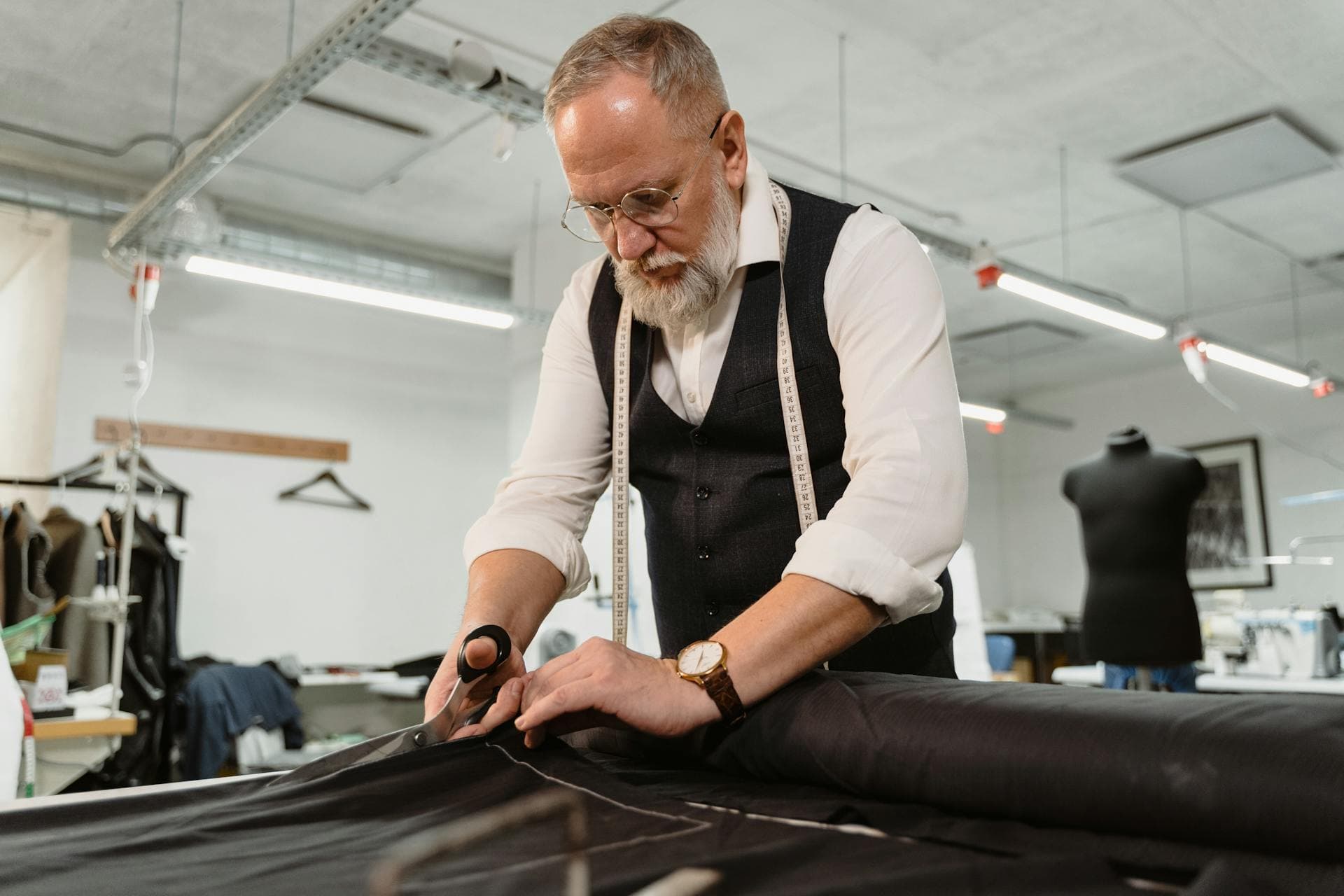
Most men can tell when a suit looks bad. Fewer can articulate why. The difference between a suit that commands a room and one that looks borrowed comes down to five specific points of fit — and most of them are fixable by an experienced tailor. Here is what to check.
1. Shoulders — The Non-Negotiable
The shoulder seam must sit precisely at the edge of your shoulder — not rolling down your arm, not sitting in from the edge. When the shoulder is wrong, the whole jacket twists, pulls, and divides opinion. This is the one measurement you cannot easily alter: always buy a suit where the shoulders are correct. Everything else is secondary.
2. Chest — Close Without Pulling
Button the jacket. The chest should close cleanly, with no pulling across the front and no visible X-shaped creases radiating from the button. When you open the jacket, you should be able to fit a loose fist between the lapels and your chest.
A jacket that gaps open at the chest is too small. One that hangs away from the body in the front is too large. Both are fixable: a tailor can suppress the waist and chest to create a cleaner silhouette, or take in excess fabric across the front panels.
3. Jacket Length — Covering the Seat
The classic test: curl your fingers under the hem of the jacket. The hem should rest in your palm. Alternatively, the jacket should just cover the seat of your trousers when standing naturally.
A jacket that is too long makes a man look shorter; one that is too short exposes the seat and looks unfinished. Jacket length can be shortened by a tailor, though it is a moderately complex alteration. It cannot be lengthened.
4. Sleeve Length — The Shirt Cuff Rule
With arms relaxed at your sides, the jacket sleeve should end so that approximately half an inch (1.2 cm) of your shirt cuff is visible. This is the universal standard in English tailoring and one of the most visible markers of a well-fitted suit.
Sleeve length is one of the easiest and most common alterations a tailor makes. If a suit fits well everywhere else but the sleeves are too long, do not overlook it — the fix is straightforward and the improvement to the overall look is significant.
5. Trouser Break — A Matter of Taste, Precisely Executed
The “break” is where the trouser leg meets the shoe. Contemporary dressing leans towards no break or a slight break — the trousers ending cleanly at the top of the shoe, or with a very small fold of fabric. A full break (trousers pooling over the shoe) reads as outdated in most modern contexts.
Trouser length is perhaps the most common alteration of all. Whatever your preferred break, a tailor can set it precisely to your shoe height and posture — something a tailor assessing you in person can do far more accurately than a shop alteration.
Get every point of fit corrected
Fine Tailors visits your home to assess and alter your suits in person. Book a visit — we address all five fit points in a single appointment.
← Back to Blog